How long does land clearing take per acre?
For most wooded lots around Houston, about a day per acre with a forestry mulcher, and that single number hides a wide range. Published production rates run three to five acres a day in light brush, two to three in medium growth, and half an acre to two in heavy woods. Traditional clearing with a dozer, an excavator, and haul trucks moves slower, roughly half to one acre a day once cleanup is counted. Density, ground conditions, and what happens to the debris decide where your property lands.
Production rates by density
Equipment makers and working operators publish numbers that agree with each other, and with what we see in the field:
| Vegetation | Mulching pace | Traditional clearing |
|---|---|---|
| Light brush and saplings | 3-5 acres/day | 1-2 days/acre |
| Medium brush, small trees | 2-3 acres/day | ~0.5-0.8 acre/day |
| Heavy brush and woods | 1-2 acres/day | Several days/acre |
| Dense mature timber | 0.5-1 acre/day | A week or more/acre |
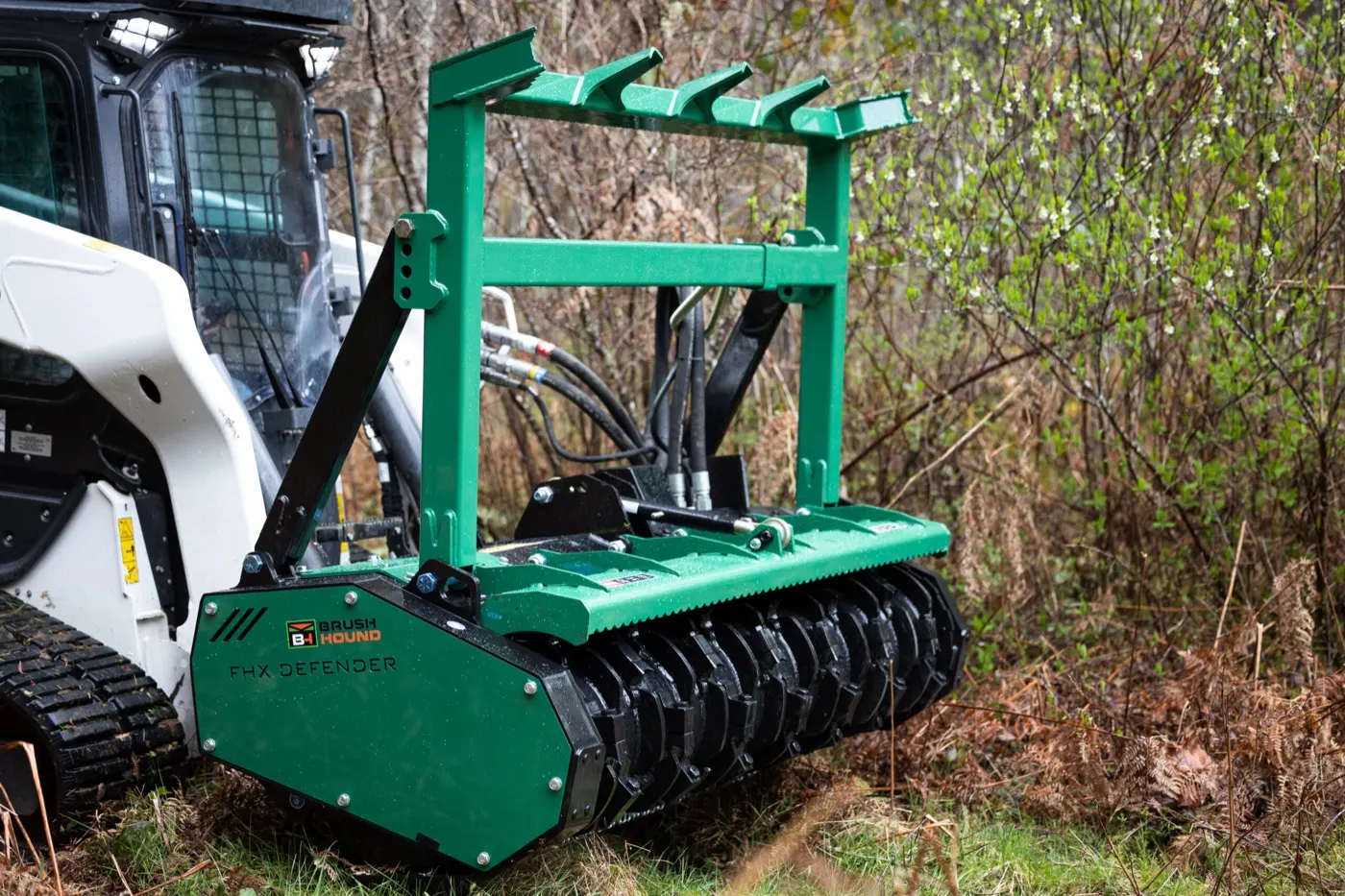
Machine size moves the table. A skid steer mulcher in the common power class runs one to four acres a day depending on growth; step up to a dedicated high-horsepower mulching tractor and light-work pace can multiply several times. One operator up the road in Willis publishes exactly that spread for its own fleet: a 120-horsepower skid steer rated at half an acre to two acres of underbrush a day, and a 160-horsepower purpose-built machine at two to six.
The typical wooded lot around Spring, Conroe, and the rest of the Piney Woods, loblolly canopy over a yaupon and greenbrier understory, prices out as that middle tier. Call it one to three acres a day mulched, slower wherever mature trees have to come down whole.
Why mulching and traditional clearing are different jobs
The speed gap is not about the machine being faster. It is about what happens to the material.
Forestry mulching grinds brush and trees where they stand and leaves the grindings on the ground as cover. Nothing is piled, loaded, hauled, or burned. One machine, one pass, and the acre is done when the mulcher reaches the far fence.
Traditional clearing knocks everything down, then handles it: pile, load, haul or burn, dig the stumps, backfill the holes, and stabilize the bare soil it exposed. Every one of those steps adds days, which is how the same two-acre lot can be a one-day mulching job or most of a week of clearing. That said, traditional clearing produces something mulching cannot: bare, grubbed, buildable dirt. Mulching leaves root systems in the ground. If a slab is coming, the pad footprint needs grubbing either way, and we usually pair a mulched lot with targeted grubbing exactly where the concrete goes. Cost follows the same fork, and our land clearing cost guide breaks those numbers down.
The five things that stretch a timeline
Density is the headline, but these five move real schedules:
- Wet ground. Rain-soaked clay stops equipment cold, and Houston averages nearly 52 inches of rain a year with no true dry season. Tracked mulchers get back on soft ground days before wheeled equipment, but saturated is saturated, and pushing it just ruts the site.
- Stump handling. Grinding flush is quick. Digging stumps and roots out of a build pad is excavator work with backfill and compaction behind it, and it belongs in the schedule from the start.
- Debris method. Mulch-in-place adds zero handling time. Hauling adds loader and truck cycles. Burning, on the rare local job where it is even an option, adds weather windows and rules.
- Access. Machines need a workable route in, roughly a gate-and-a-half wide. A lot with one tight entry point spends real time repositioning instead of clearing.
- Terrain and obstacles. Slopes, ditches, old fence wire, buried debris, and creek fingers all cut pace. Published operator guidance knocks production down by a third or more on tough ground.
What that means for your project
For planning, these ballparks hold for typical Piney Woods growth: a half-acre to one-acre residential lot mulches in about a day, a one-to-two-acre homesite runs one to two days, and five acres or more scales at the rates above, plus grubbing and grading wherever a pad is coming. Mobilization brackets everything, which is why the far-side jobs get scoped so the whole list happens in one trip.
The honest answer to “how long” is that our land clearing service quotes it after walking the property, because two identical-sounding acres are routinely different jobs. The walk is free, the estimate is firm, and the timeline you get is one we can actually hit. Call (281) 432-7360 and we will put real dates on it.